Willkommen auf der Seite der "Textinitiative Fukushima"
Die Seiten der Textinitiative Fukushima werden derzeit von der Japanologie der Goethe-Universität betrieben. Gegenwärtiges Anliegen von TIF ist die zeitgeschichtliche Dokumentation. Das Forum dient nun in erster Linie als Archiv für Informationen zu 3/11 sowie allgemein zur Geschichte des Atomaren. Die Suchfunktion ermöglicht Recherchen zu Stichworten, Inhalten und Akteuren.
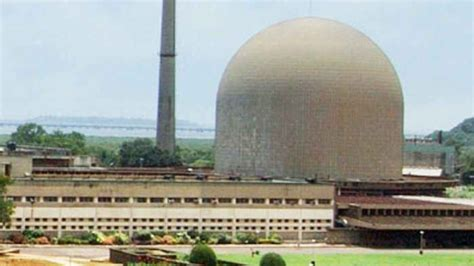
| Bhabha Atomic Research Centre (BARC): Atomare Einrichtungen im kultur- und zeitgeschichtlichen Rückblick | 20.01.2022 |
Am heutigen Tag (20. Januar 1957) vor 65 Jahren wurde in Indien als Atomic Energy Establishment Trombay (AEET) vom damaligen indischen Ministerpräsidenten Jawaharlal Nehru das Bhabha Atomic Research Centre gegründet. Das BARC beschäftigt rund 7000 Mitarbeiter. Sie sind in allen Bereichen der Nuklearforschung (Wiederaufarbeitung, Kernwaffen, Reaktorforschung usw.) tätig. Das Bhabha Atomic Research Centre besitzt vier in Betrieb befindliche und vier abgeschaltete Reaktoren. "Am 13. Dezember 1991 brach eine Leitung, die radioaktives Schmutzwasser in die See leitet. Mehrere Arbeiter wurden bei den Aufräumarbeiten verstrahlt." (Wikipedia)
Links: https://de.wikipedia.org/wiki/Bhabha_Atomic_Research_Centre |
|
| "Tokio hofft auf eine positive Bewertung durch die Wiener UN-Atomenergiebehörde (IAEA)" (...) | 17.01.2022 |
"Aber auch das doppelt gereinigte Wasser enthält Reste diverser Radionuklide. Das radioaktive Tritium und Carbon-14 entfernt das Filterwerk ALPS auf dem AKW-Gelände gar nicht. Die IAEA stuft Tritium in geringen Mengen als unbedenklich ein. Atomanlagen lassen daher mit Tritium kontaminiertes Kühlwasser im Regelbetrieb ins Meer ab. Die geplanten Meerwasserpumpen könnten das Tankwasser um mehr als das Hundertfache verdünnen. Greenpeace hält eine Verdünnung um das 360.000-fache auf 187 Millionen Olympia-Schwimmbäder für notwendig." Link: https://taz.de/!5823473/ (Martin Fritz, taz, 5. Januar 2022) |
|
| Grünes EU-Label für Atomenergie überascht auch Japan | 12.01.2022 |
"The EU is planning to label energy from nuclear power and natural gas as “green” sources for investment despite internal disagreement over whether they truly qualify as sustainable options." (...) "But the fact the European Commission quietly distributed the text to member states late Friday, in the final hours of 2021 after the much-delayed document had been twice promised earlier in the year, highlighted the rocky road to draft it. If a majority of member states back it, it will become EU law, coming into effect from 2023. France has led the charge for nuclear power — its main energy source — to be included, despite robust opposition from Austria and skepticism from Germany, which is in the process of shutting all its nuclear plants." (....) Link: https://www.japantimes.co.jp/news/2022/01/02/world/eu-nuclear-energy-green/ (Japan Times, 2. Januar 2022) |
|
| Art and Voice in the Memorialization of 3.11 (14.01.2022) | 10.01.2022 |
"10 years after the Great East Japan Earthquake (Higashi Nihon Daishinsai) or 3.11, in this presentation, we look at how artists and survivors have dealt with the aftermath of the catastrophe focusing on processes of memorialization through art and voice." "Fuyubi Nakamura will give an online tour of the exhibition “A Future for Memory: Art and Life After the Great East Japan Earthquake” she curated and which was held from February 11 to September 19, 2021 at the Museum of Anthropology at UBC, Vancouver (Canada). The second part deals with the question of voice in memorialization processes based on two student research projects. Under the supervision of Anna Wiemann, students transcribed and interpreted interviews with survivors in the small community of Minami-Sanriku (Miyagi prefecture) conducted in 2012 by students from the ‘Tōhoku kara no koe’ project and oral narrative archive lead by Prof. David Slater (Sophia University Tokyo). Dr. Fuyubi Nakamura (中村冬日) is a socio-cultural anthropologist trained at Oxford (DPhil 2006). She holds a joint position of Curator, Asia at the Museum of Anthropology (MOA) and Assistant Professor in the Department of Asian studies at the University of British Columbia (UBC). She is also Associate Member in UBC’s Department of Anthropology. Fuyubi specializes in the anthropology of art, museum studies, and material and visual culture studies. She took a leave from academia following the triple disaster in Japan in 2011 and was involved in relief and recovery activities in Miyagi Prefecture, and continues to do research about the aftermath of 3.11. Datum: 14.01.2022 10:00 Uhr – 12:00 Uhr Link: https://www.japan.uni-muenchen.de/veranstaltungen/art_and_voice/index.html |
|
| Zehn Jahre Fukushima. Gesundheitliche Folgen der Atomkatastrophe - Ein Resümee von Alex Rosen (IPPNW) | 29.12.2021 |
"Lehren aus der Katastrophe
Link: |
|
|
246-250 von 812
|